The Angelus: Our Newsletter
Volume 28, Number 5
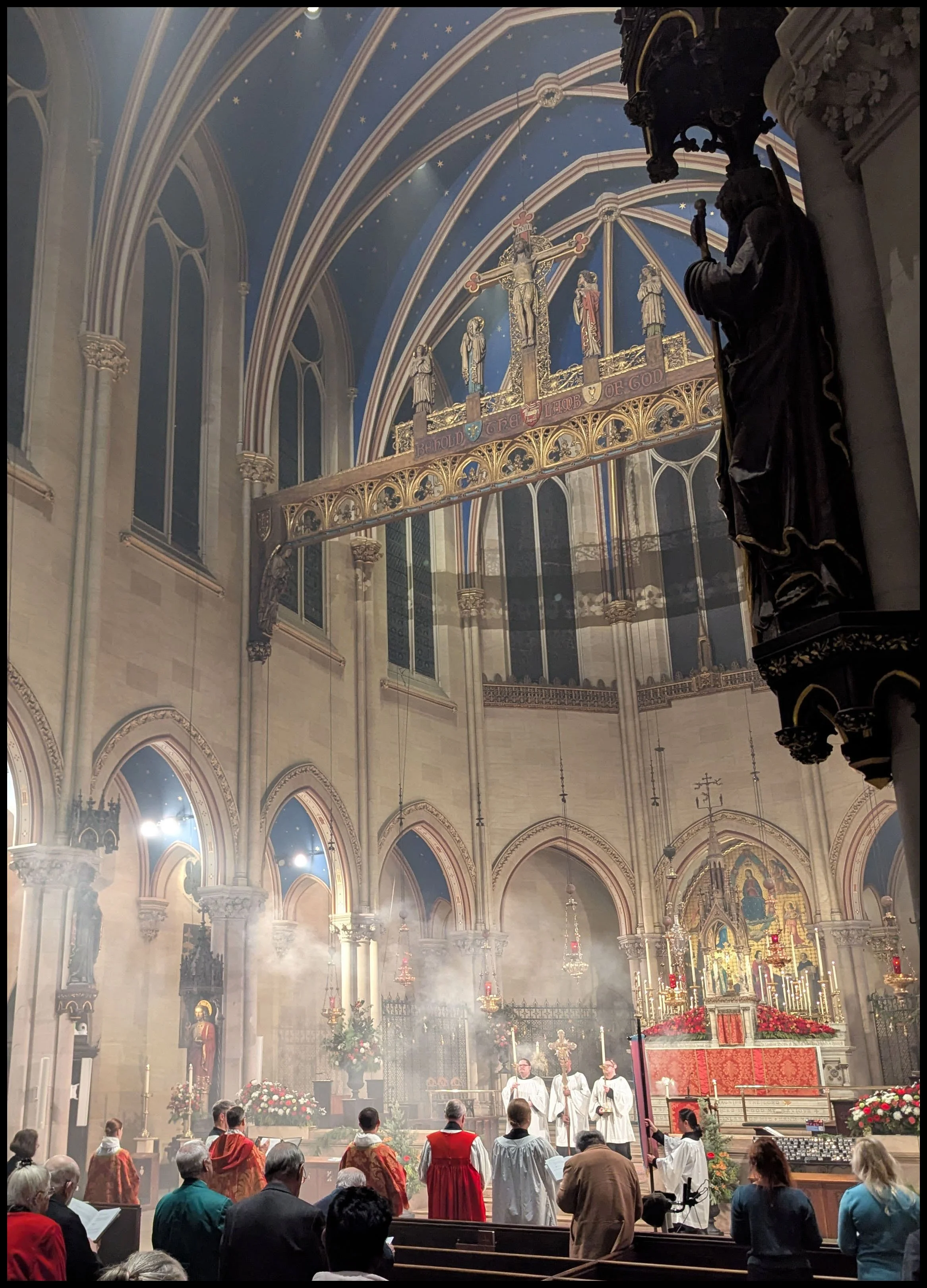
SAINT LEO THE GREAT: ON THE FEAST OF THE NATIVITY
On all days and at all times, dearly beloved, does the birth of our Lord and Saviour from the Virgin-mother occur to the thoughts of the faithful, who meditate on divine things, that the mind may be aroused to the acknowledgment of its Maker, and whether it be occupied in the groans of supplication, or in the shouting of praise, or in the offering of sacrifice, may employ its spiritual insight on nothing more frequently and more trustingly than on the fact that God the Son of God, begotten of the co-eternal Father, was also born by a human birth.
Read MoreVolume 28, Number 4
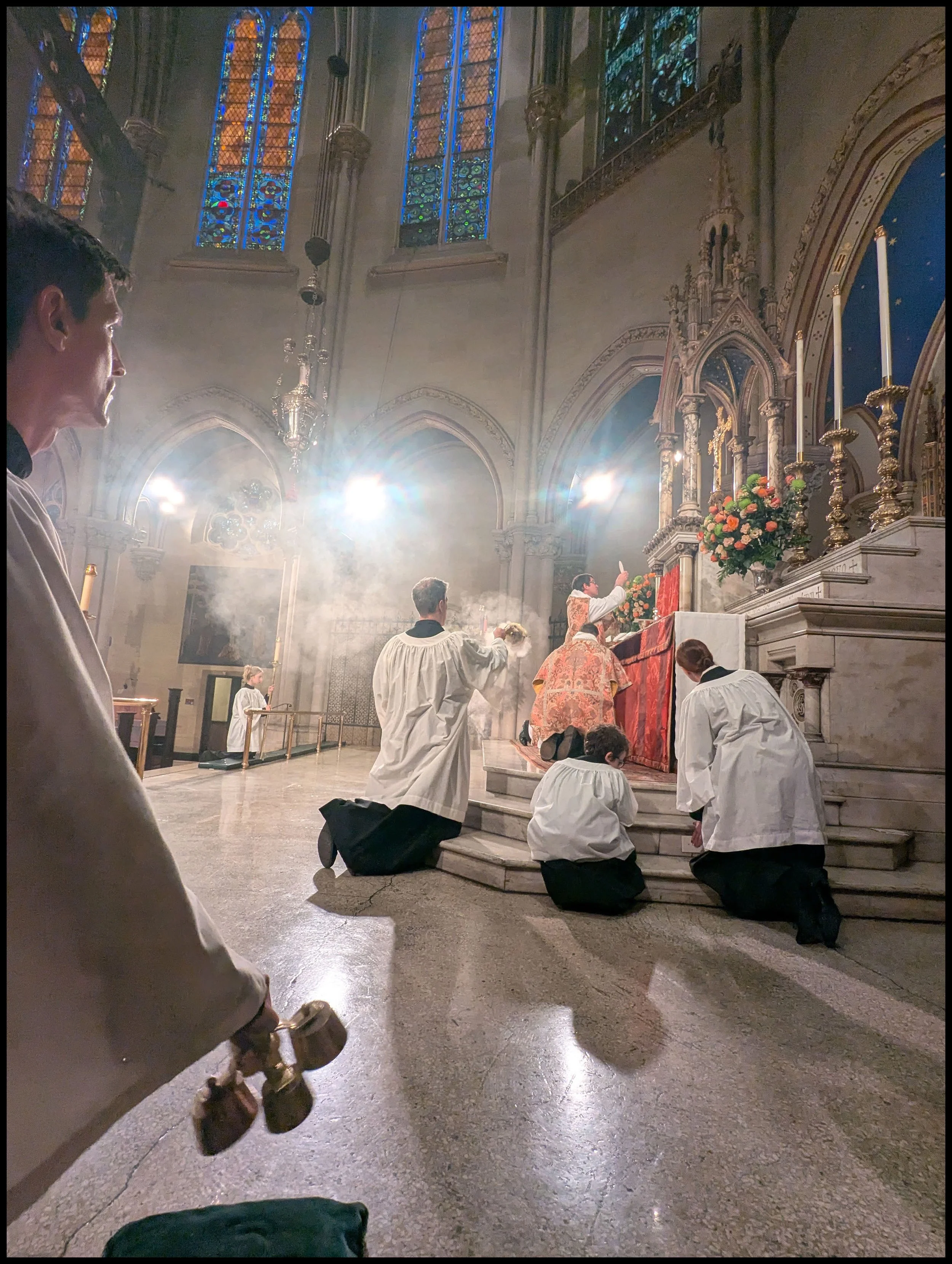
FROM KATHERINE HOYT: THE LOVE OF GOD AND GOD’S GREAT BEAUTY
For most of my life, St. Francis of Assisi had always seemed to me a man of incredible contradiction. He is primarily famous for two things, his irrepressible love and affection for God and His creation, and his severe ascetic lifestyle. I couldn’t understand how to reconcile those two facets of his character. When we arrived in Assisi the trees were still green, but by the day we left they’d started to turn red and gold.
Read MoreVolume 28, Number 3
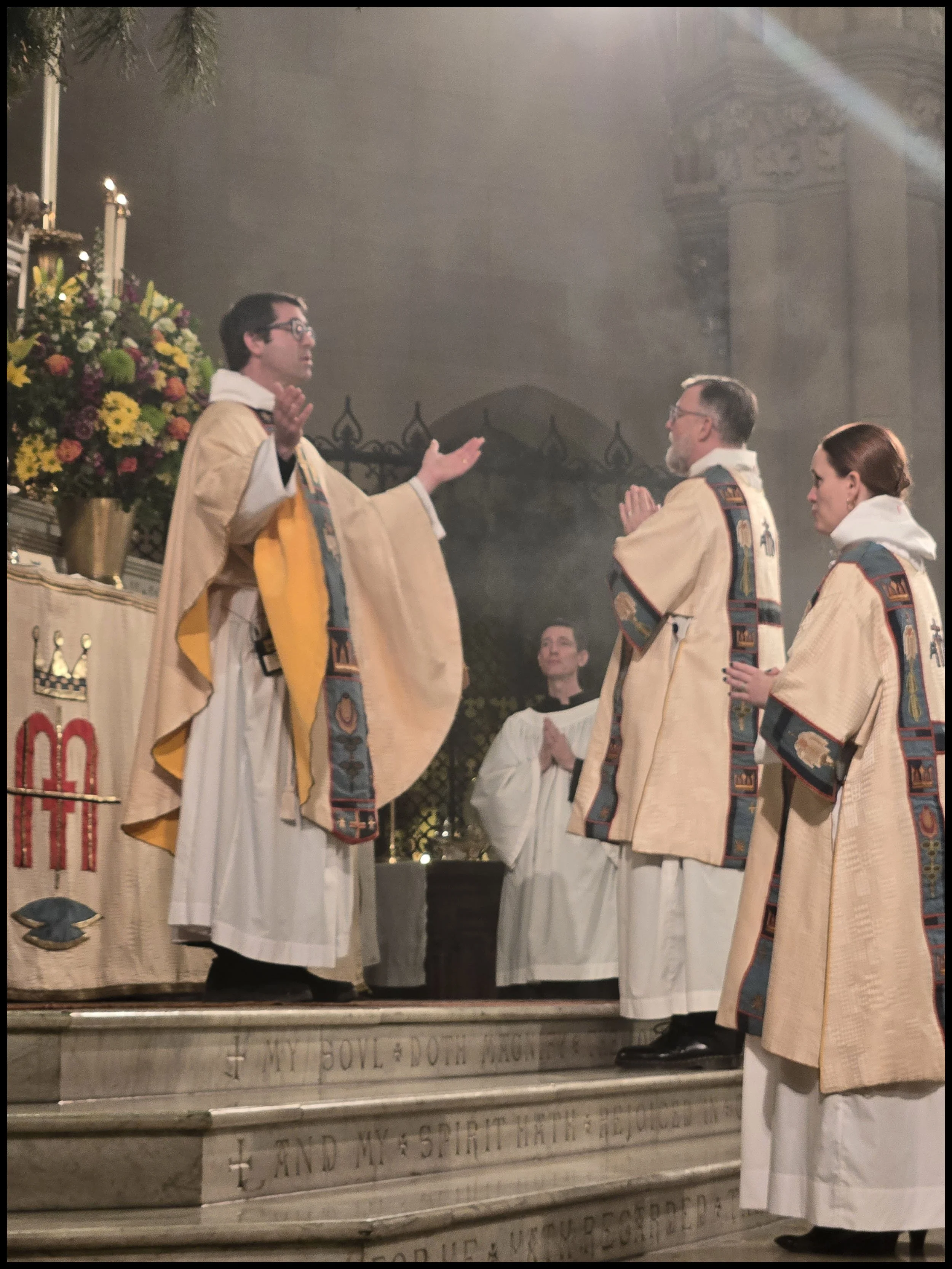
FROM FATHER SAMMY WOOD: TSUNDOKU AND STORY
At long last, we’ve come to my favorite time of the year. As we move deeper into December, the days grow infinitesimally shorter until the solstice, and I love winter—the darker and colder, the better! Christmas is still out in front of us, and I prefer my gratification delayed yet a little longer still, thank you very much. And by now packages have begun appearing under the rectory tree. Some of which are book-shaped!
Read MoreVolume 28, Number 2
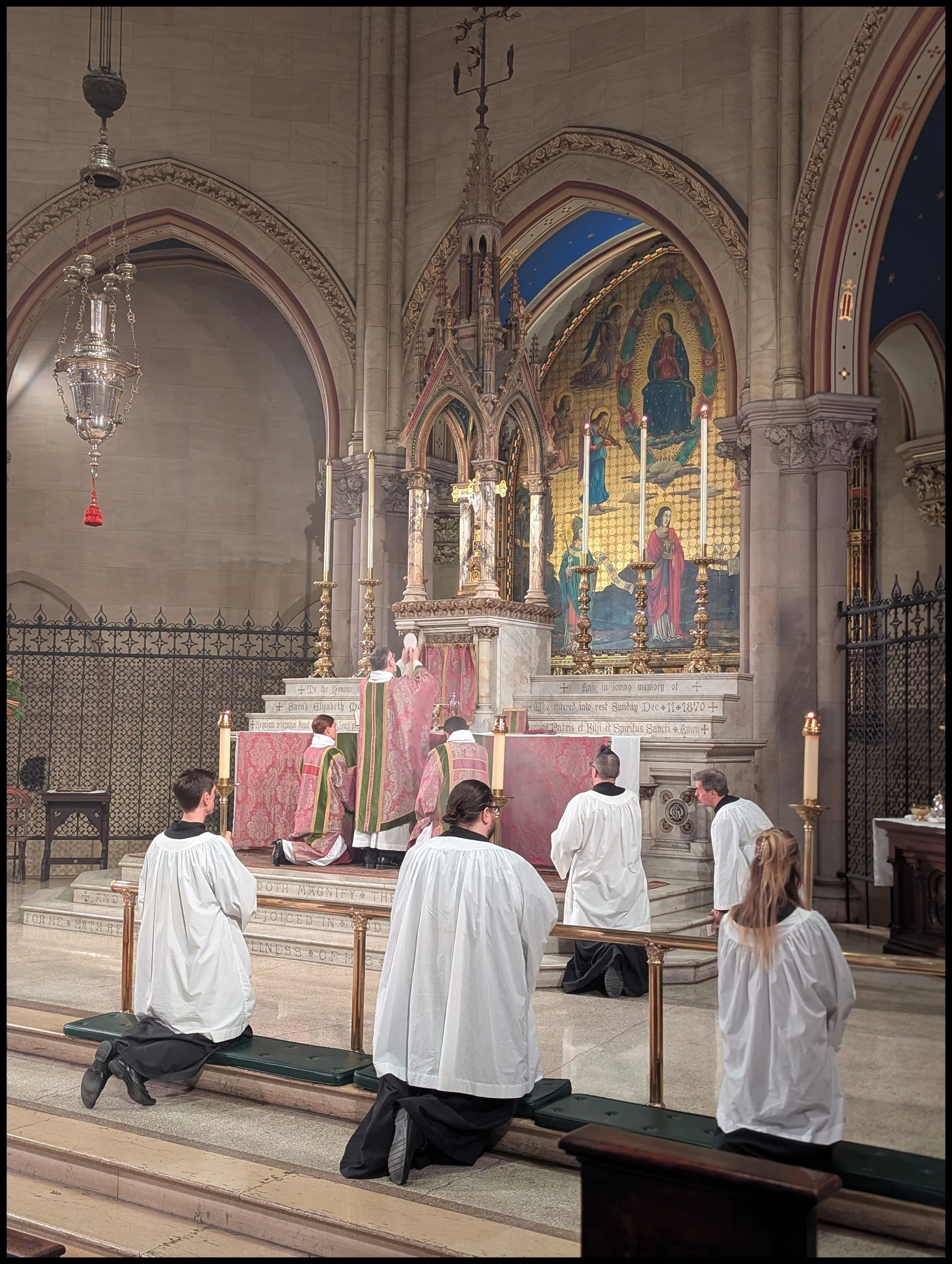
FROM BROTHER FINNIAN SHANNON, SSF: PAX ET BONUM
For many that know me, they could tell you that genealogy is a passion of mine. How does this relate to a pilgrimage to Assisi, Italy, you may ask? Well as a Franciscan friar with the Society of Saint Francis I was excited to learn through genealogical research that some of my very distant relatives had close connections to Saint Francis and the Franciscan order. Matteo Rosso Orsini (1178-1246), a thirteenth-century Roman Senator, was a personal friend to Saint Francis of Assisi and a Third Order Franciscan.
Read MoreVolume 28, Number 1
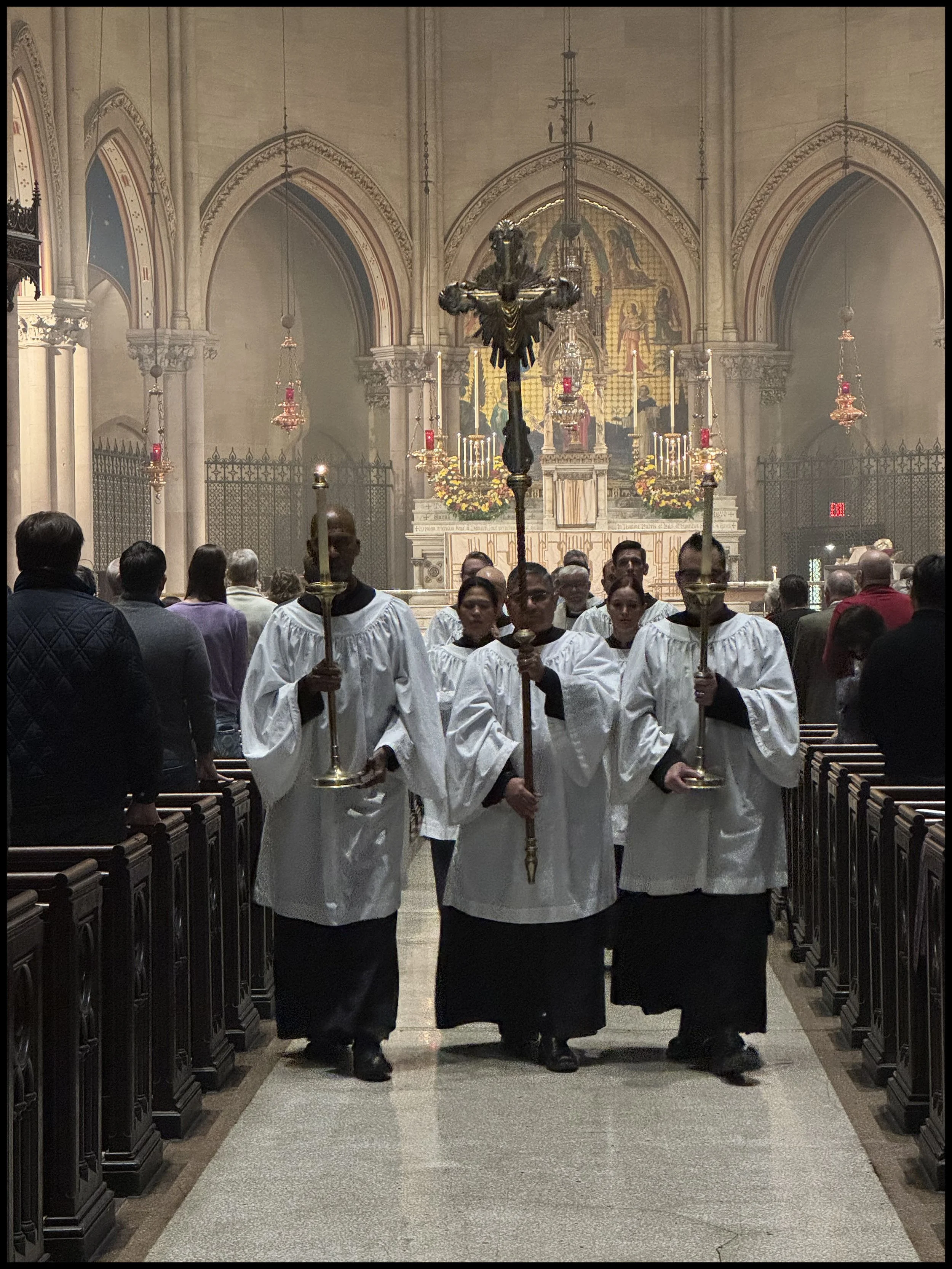
FROM MARY ROBISON: HISTORICAL MISSION WORK AT SAINT MARY’S
Our liturgy and our church are dazzlingly beautiful. Our worship is exuberant. Our music is unsurpassed. How about our ministry to the world? As we begin to live into our Year of Service, it’s worth considering what our parish has done throughout its history to make Midtown Manhattan (and the world) a better place. What could I find in our early records about mission work at Saint Mary’s in the nineteenth century?
Read MoreVolume 27, Number 52
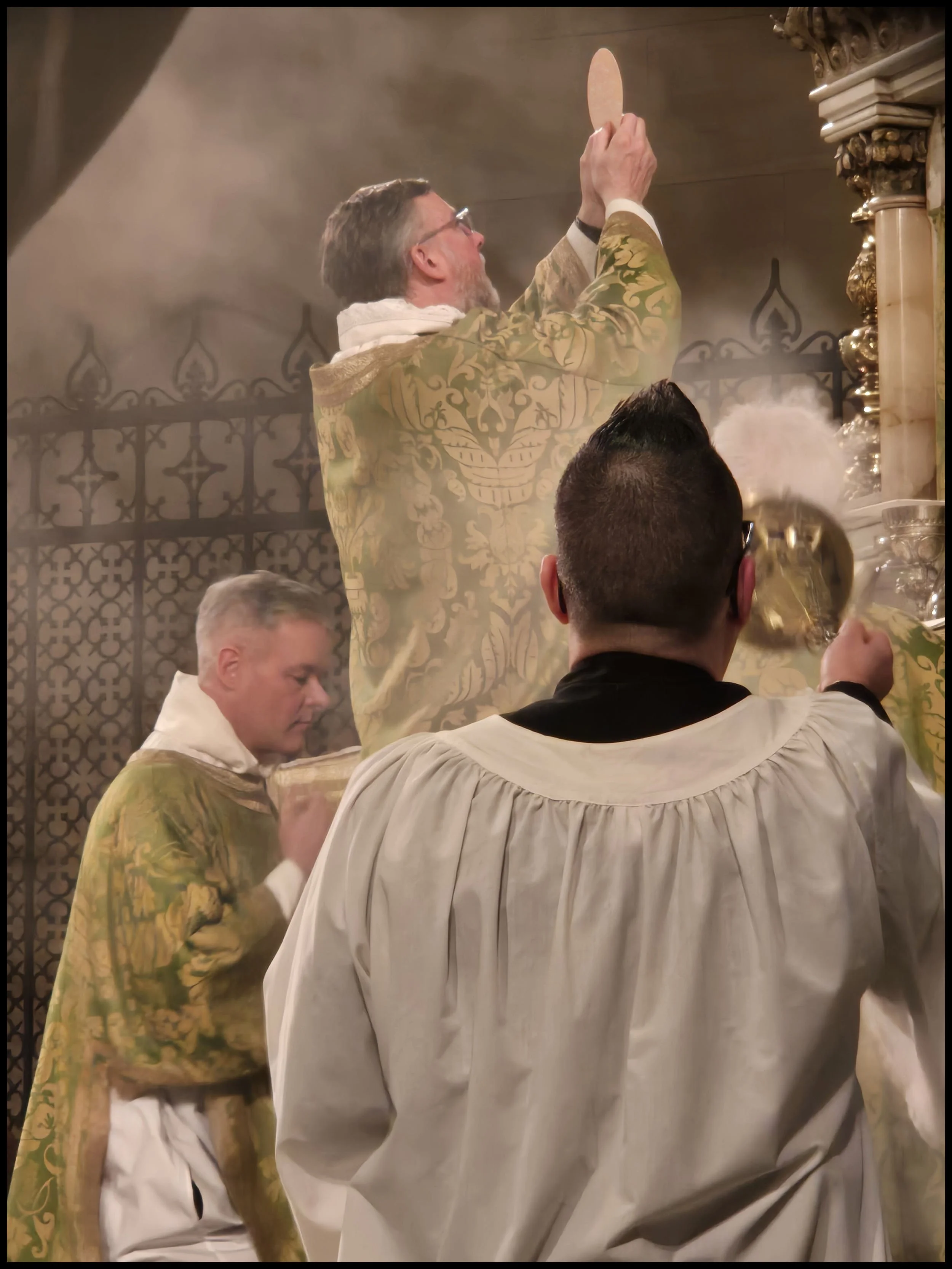
FROM FATHER SAMMY WOOD: STAFFING AND STEWARDSHIP
This Sunday, as we celebrate Christ the King, we will gather all the pledge cards we have received this year and pray over them at the 11:00 Mass. These cards represent our desire to return to God the first fruits of our labor and toil, the work of our lives, and we are asking God to bless our intention to be good stewards of all he has given us as individuals and families. When your Board of Trustees charged the Stewardship Committee, one task it assigned was to work to build a “culture of stewardship” at Saint Mary’s, and that Board and your staff are always trying to be part of that culture by faithfully stewarding what God has provided to Saint Mary’s and what you entrust to us in your pledges.
Read MoreVolume 27, Number 51
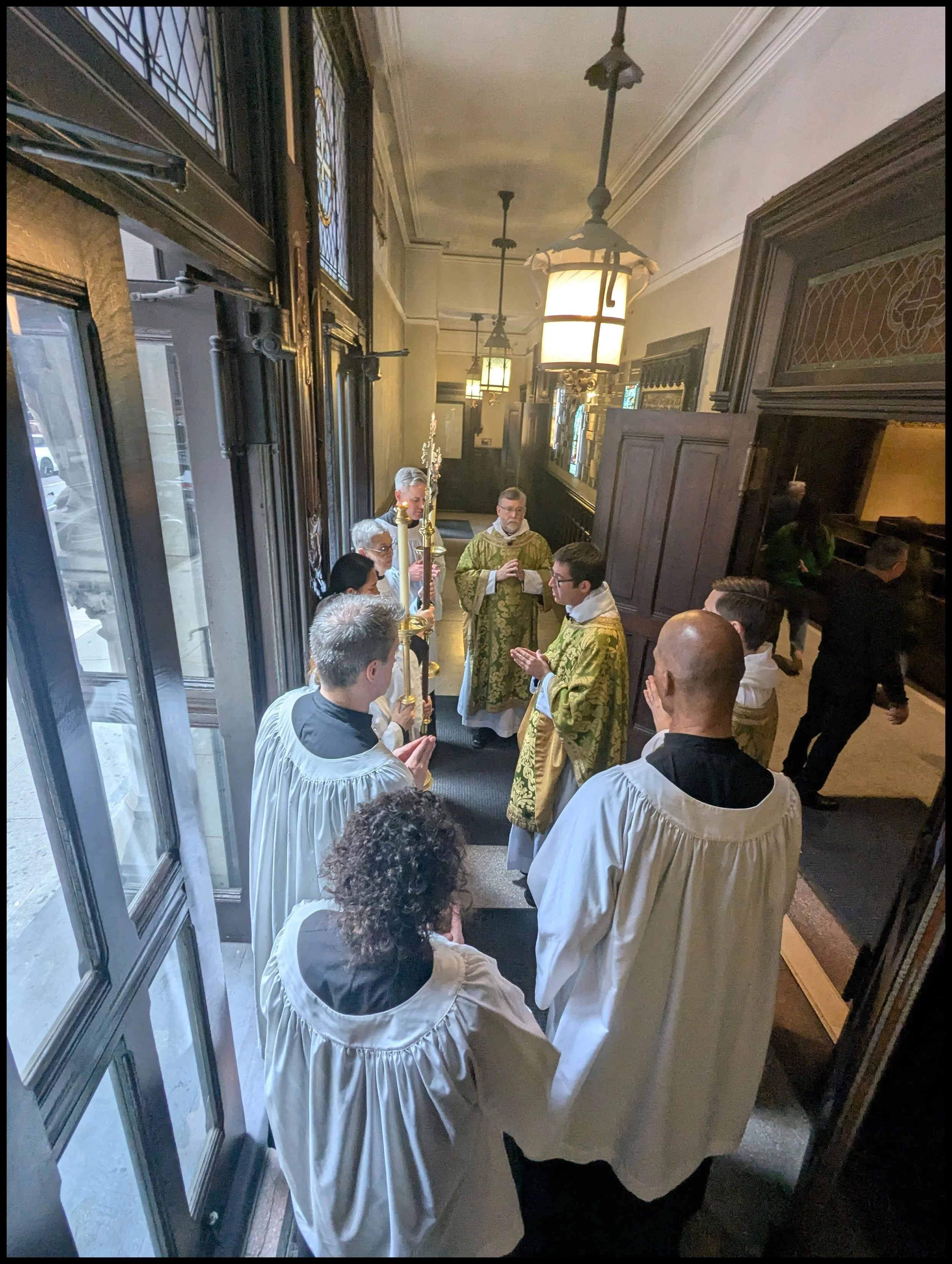
FROM FATHER SAMMY WOOD: GUIDELINES FOR GIVING
Since the earliest decades of the Church, Christians have been renowned for their peculiar lives. An anonymous second-century document called the Epistle to Diognetus is an early example of Christian apologetics, written to defend the faith against the charges of its critics. In one remarkable section, it reads:
There is something extraordinary about their lives . . . Christians love all men, but all men persecute them. Condemned because they are not understood, they are put to death, but raised to life again. They live in poverty, but enrich many; they are totally destitute, but possess an abundance of everything.
Read MoreVolume 27, Number 50
FROM MARYJANE BOLAND: STEWARDSHIP AT SAINT MARY’S: TIME, TALENT, AND TREASURE
Two weeks ago, I wrote in the Angelus about continuing our commitment to Saint Mary’s—remembering her in our wills or other financial documents. This week, I write about something more immediate: our stewardship campaign, our annual fund, our opportunity to provide for Saint Mary’s from our time, talent and treasure. Volunteering to help is certainly a big part of stewardship, and we would love to talk to you about opportunities. But treasure, your annual pledge, is an immediate need.
Read MoreVolume 27, Number 49

FROM FATHER STEPHEN MORRIS: THE HOLY SPIRIT AND THE BODY OF CHRIST
When we are baptized, we affirm our faith in the words of the Apostles’ Creed and when someone else is baptized, we re-affirm our faith in these same words. We recite the Apostles’ Creed twice a day, in Morning and Evening Prayer. The words of the Apostles’ Creed are easily some of the words most frequently uttered in the Episcopal Church.
Read MoreVolume 27, Number 48

FROM MARYJANE BOLAND: CONTINUING OUR COMMITMENT TO SAINT MARY’S
People give to Saint Mary’s in different ways. We make an annual stewardship pledge that we pay weekly or monthly. We respond to appeals—to buy flowers for the altar, to buy toiletries and underwear for Neighbors in Need, to buy security cameras for the narthex. We slip a few dollars into the collection plate or a shrine. We also give by doing. We bring lightly-used coats and clothing for Neighbors in Need or volunteer to staff a drop-by afternoon. We walk or contribute to the Saint Mary’s AIDS Walk team.
Read MoreVolume 27, Number 47

FROM DR. DAVID HURD: THE 2025-2026 FEAST DAY RECITAL SEASON
The organ at Saint Mary’s, Aeolian-Skinner Opus 891, dates from 1932 with additions in 1942 and 2002. It is a world-famous instrument largely due to its high rear-galley installation and the resultingly rich musical voice it has given to the dynamic worship life of Saint Mary’s. Its tonal refinement (in contrast with its strikingly unfinished appearance), and its thrilling engagement of the church’s gracious acoustics, have been brought to life by the remarkable musicians, too many to name, who have performed a remarkably wide range of music on it through the years in the liturgy, in recital, and on recordings.
Read MoreVolume 27, Number 46

FROM MARIE ROSSEELS ON RELICS: ART AND DEVOTION
On September 14, in celebration of Holy Cross Day, a relic of the True Cross was displayed for veneration in the Mercy Chapel. The veneration of saints and their relics began in the earliest years of Christianity as a way of honoring martyrs, with evidence of this practice dating back to the martyrdom of Saint Polycarp in AD 156. Initially, relics came from the bodily remains of a saint but by the end of the fourth century, the veneration of relics had grown to include secondary objects such as clothing. In 787, the Second Council of Nicaea decreed that relics should be used to consecrate churches.
Read MoreVolume 27, Number 45

FROM BLAIR BURROUGHS: ON CENTERING PRAYER
Centering Prayer is a receptive method of silent prayer in which we experience God’s presence within us, closer than breathing, closer than thinking, closer than consciousness itself. This method of prayer is both a relationship with God and a discipline to foster that relationship. This definition comes from Contemplative Outreach, an organization founded to promote Centering Prayer. What this means to me is Centering Prayer is a method that allows me to be open and experience the reality that I am in communion with God always. Yet despite this fact, I need to cultivate this reality, this relationship, through discipline.
Read MoreVolume 27, Number 44

DR. CHARLES MORGAN ON THE ROSARY: ORIGINS, BENEFITS, AND A BEGINNER’S GUIDE
Growing up in the Anglican Church in Jamaica, the rosary was not part of my spiritual practice. I became aware of this form of prayer after I participated in a Cursillo weekend in the 1990s, and would meet regularly with a few people who worked in my department for weekly reflection and prayer on the work that we were doing. The word “rosary” comes from the Latin rosarium, meaning “rose garden,” symbolizing a bouquet of prayers offered to God through the intercession of Mary.
Read MoreVolume 27, Number 43

FROM FATHER SAMMY WOOD: A YEAR OF SERVICE
On Tuesday we celebrated the feast of St. Ninian of Galloway at the midday Mass at Saint Mary’s. Ninian was born sometime in the late third century, and we don’t know a lot about his life—just that he was a Celt, lived in southern Scotland, possibly studied and was made a bishop in Rome, and that he led the first major effort to spread the gospel of Jesus Christ “north of the Wall,” that is, to people living outside Roman-controlled territory.
Read MoreVolume 27, Number 42

FROM FATHER MATT JACOBSON: ON HOLY CROSS DAY
Since Holy Cross Day, September 14, falls on a Sunday this year, the feast will be transferred to Monday the 15th. Many ancient feasts in the calendar of the Church, including Holy Cross Day, have their roots in the dedication of a church. On September 14, 335, the Church of the Holy Sepulcher in Jerusalem—a large church complex built over the site of the Cross and Christ’s tomb—was dedicated. The origins of the feast and of this church go back even further to the year 326, when St. Helena first traveled there with her son, Constantine the Great.
Read MoreVolume 27, Number 41

FROM INGRID SLETTEN: STARTING SPIRITUAL DIRECTION, AN ONLINE CLASS
Conversations about God, with another person, trained in these conversations, is called spiritual direction. Richard Foster said direction is “simply a relationship through which one person assists another in attending to the presence and call of God in all of life.” But how does this work? “Me, talking with God?”, you might be saying. On one hand, this seems a tall order, conversing with the Divine. Yet our relationship with God is like all relationships; they begin with familiar yet intimate places of intersection.
Read MoreVolume 27, Number 40

FROM FATHER WOOD: SUMMER’S END
I’m just returning from vacation this week, and I owe a hearty “thanks!” to the staff and our amazing volunteers for all their faithful work that allowed me to take some time away. My family has had a wonderful summer, and I’m deeply grateful Saint Mary’s is the kind of parish that encourages her priests to seek restorative time away. Now it’s hard to believe summer’s almost over!
Read MoreVolume 27, Number 39

FROM CHRIS EDLING: THE STILL POINT OF THE TURNING CITY, A YEAR AT SAINT MARY THE VIRGIN
“I want to make this happen.” This is what Fr. Sammy said when, one year ago, I introduced myself at coffee hour and asked to join Saint Mary’s as a seminarian intern. It was not a small ask. As a seminarian, I’d not only be leaning on Fr. Sammy’s time as a supervisor, meeting with him several times each month. I was also asking for a kind of vocational adoption (or fostering, at least) by the Saint Mary’s family, who’d collectively take me in and nurture my clerical growth.
Read MoreVolume 27, Number 38

WHAT’S ON YOUR BOOKSHELF?
Steven Eldredge, what’s on your bookshelf?
This Homeward Ache by Amy Baik Lee (B&H Publishing Group, 2023)
How did you hear about this book?
I read about it first on Brenton Dickieson’s excellent blog: A Pilgrim in Narnia.
Read More